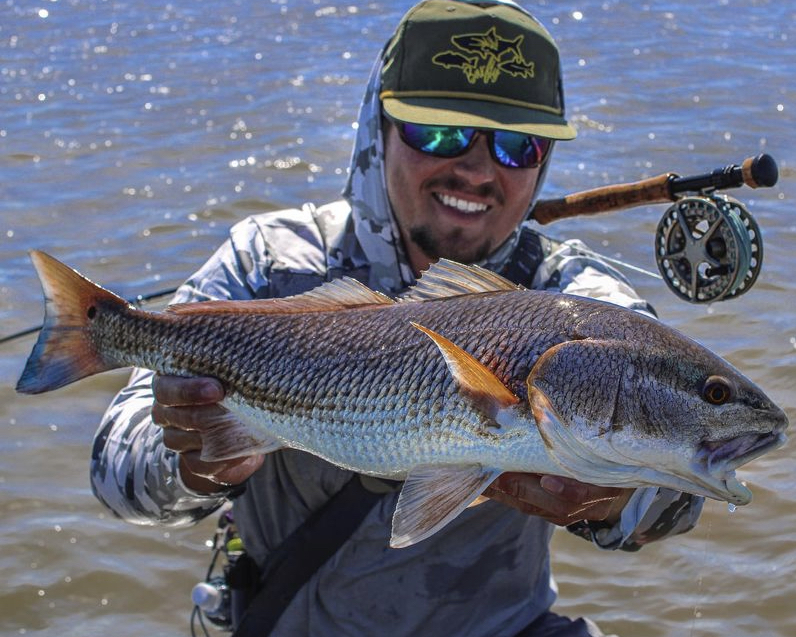

Here we breakdown some key beginner questions when they’re first starting out in saltwater fly fishing. We chat with expert fly fishing angler, and marine ecologist, Quincy Milton III. He’s going to give newbie anglers like myself some great tips to get started hunting saltwater species on the fly.
What locations could I go to try saltwater fly fishing?
You can enjoy saltwater fly fishing locations from beaches, salt rivers, estuaries, flats, and on open water. If you do not have a boat, beaches, salt rivers, estuaries, and flats are your best bet to try to find fish. Keep in mind that “estuary” is an umbrella term and includes salt rivers, salt marshes, and bays. An estuary is a partially enclosed coastal body of water with a connection to the open sea while simultaneously being fed by a freshwater source. Estuaries are important to a variety of fish species development as young and contains large amounts of food. A quick look at your local aerial image is a great way to find locations to match the described locations.
The pursuit of saltwater fish can draw you to incredible destinations all over the world, especially the tropics of both the Pacific and Atlantic Oceans. Saltwater fly fishing is certainly different than conventionally fishing saltwater. In freshwater, fly fishermen can generally fish the same water as conventional fishermen, however because of the depths in saltwater, the same range does not exist for fly fishermen in saltwater. Although sinking lines can allow you to get down deeper than normal, generally you will be fishing for fish in the upper 5-15 feet of the water column and often even more shallow than that. However, depending on the body of water you are fishing, many of the techniques you learned to fish freshwater will be applicable to saltwater. Read on to find out more.
Once I find a location how do I survey the landscape and water?
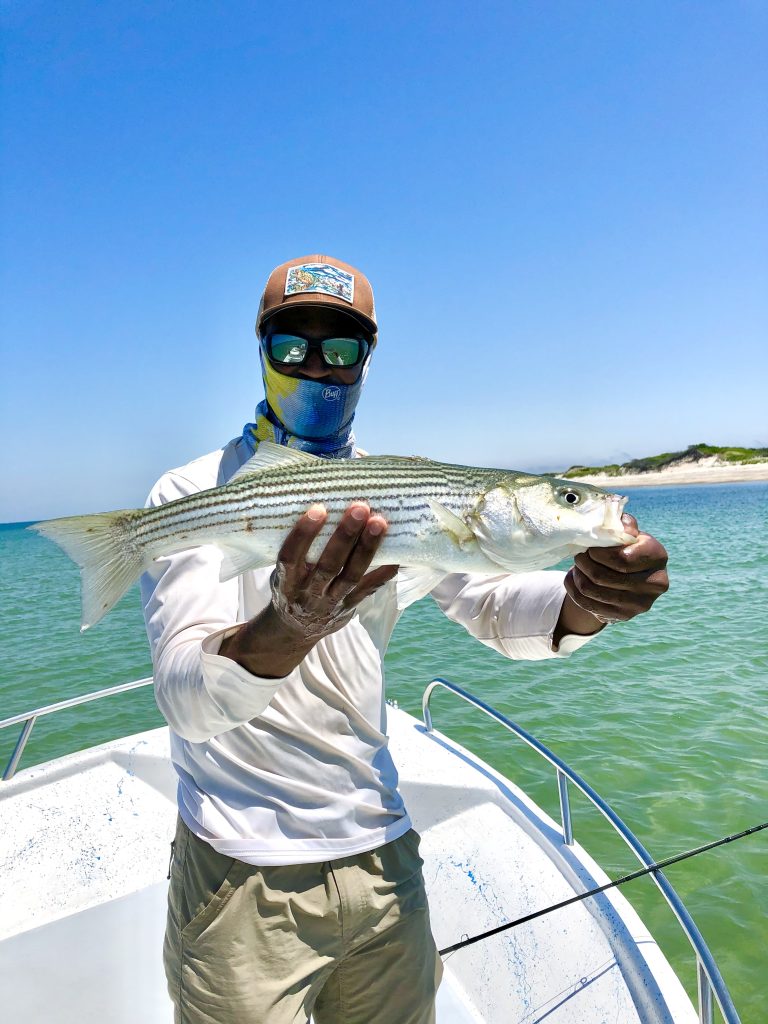
Anyone can generally apply freshwater concepts when saltwater fly fishing. Fish like structure, and finding natural or artificial structure in the form of rocks, jetties, bridges, and vegetation can be key. In addition to structure, saltwater fishing has the added wrinkle of understanding tidal movement. You always want to fish a moving tide which means that the water is either moving landward on a flooding tide or moving seaward on an ebbing tide. When the tide is not moving this is known as slack tide. This occurs at the dead high tide and dead low tide before the tide switches to the opposite direction. At this time baitfish don’t move much because they follow their own food (plankton) and therefore predator fish (generally what you are targeting) do not move/eat much either.
The next step in understanding the tide is understanding where you are fishing. Fish will congregate at different places during different tidal cycles but I use general rules of thumb.
- When fishing out in front on a beach I like to fish an incoming tide. During this time bait is pushed towards the beach and gamefish will follow them. Beaches with jetties or rock structure can fish fantastically during this time. Bait will congregate near the structure and gamefish will follow them. You may often see feeding frenzies if a large school of baitfish has congregated near large structure like this.
- There are other saltwater habitats which can fish similarly to each other. Tidal rivers, estuaries, channels, and backwaters can all follow general rules of thumbs. Again you will always want to fish a moving tide but in these areas I like to target natural choke points where a body of water goes from relatively wide to relatively narrow. These types of areas can fish like a standard trout river. As the tide moves in or out, bait will move in and out of these areas. Gamefish will follow, or they may sit at the choke point facing upstream waiting for baitfish to swim by. Whether these types of areas fish best on the ebb or flow of the tide can be location specific and you can experiment to see when you may catch the most fish.
When fishing bodies of water which resemble trout rivers, you can try a variety of methods to catch fish. Casting downstream at a 45 degree angle is a great way to simulate swinging a streamer for large rainbows. As with trout, saltwater fish will often bite just as you get ready to strip you line back. You can also cast your line strait out and strip it back. It will ultimately end downstream of you but this method can be effective when the fish you are targeting seem to be excitable. As with fishing a river, you need to be mindful of mending. You do not want your line dragging ahead of your fly. Saltwater fish may not refuse this offering as much as trout but they can still very well tell the difference between something that looks realistic and something that doesn’t.
Is there a time of day or season that is better?
The saltwater fly fishing season can be location specific. In an area like New England, you can catch striped bass all year long, however you will likely have a tough time during the hottest part of summer days and an even tougher time during the winter months. Striped bass are migratory and migrate north during the spring and summer and migrate back south for the winter. Some fish may holdover and can be caught throughout the winter, however they lie relatively dormant until water temperatures rise to a more acceptable level. This is all to say that your region and migratory pattern of you target fish will determine the best time of year you should target them. However, generally speaking fish will migrate during the spring summer and fall to and from their over-winter grounds.
Where time of day is concerned, fishing morning and evening hours can be the best times, just as in most types of freshwater fishing. Fish are generally most active during these hours as with many other organisms in the animal kingdom. When fishing from a boat, you are more mobile and have more freedom to seek out fish in different areas throughout the day, however if you are fishing from shore, focusing on morning and evening hours can be your best bet. During cooler seasons, these hours can extend into the day and depending on where you are located, during warmer seasons, fish may seek out deeper water to beat the heat.
What kind of flies should I tie or buy?
This question depends on the type of habitat you are fishing. In general, saltwater flies include baitfish patterns, crab and shrimp patterns, worms, and you can even use poppers. To get started I recommend finding a couple baitfish patterns which work for you, and pack these when saltwater fly fishing areas. My two personal basic favorite saltwater flies are the clouser minnow and Lefty Kreh deceivers. I have probably pulled three quarters of my saltwater fish on these flies and I don’t like to get too fancy with flies. Saltwater boasts quite a few baitfish which look very similar and it is easy to imitate them with basic general flies. There are times of year where certain baitfish may be migrating into your region, and patterns which imitate those fish are going to provide the most success, but you will want to have your confidence patterns.
With trout fishing, it is a good idea to have a plethora of bugs available at your disposal in order to match the hatch, but in my experience, saltwater fish will bite all kinds of patterns provided they more or less look like something they eat on a regular basis. The main aspects of baitfish you will need to match with saltwater flies is profile and size. Match profile and size and you can have great success on most day.
What type of line/leader/tippet is preferred?
Saltwater fish are bigger and pull harder than the fish you most likely encounter on a regular basis while freshwater fishing. If I were to try a location armed with zero knowledge of the fish that were there, I would likely start with a 9 foot 12-lbs leader and an intermediate line. As you start to gain knowledge of your fishery and change the areas you fish, you can adjust accordingly. Sinking, intermediate, and floating line scenarios can vary. I use my intermediate line the most from shore to have the best combination of castability and fishability. When fishing from a boat I often use a sinking line unless fish are actively feeding at the surface. My floating line comes into play when fishing on flats or in shallow water in general.
Floating lines are great for saltwater fly fishing at the surface or fishing in areas like flats where you need a more delicate presentation. These lines are going to be the easiest to cast and control. However, even with a sink tip, floating lines will do little good for fishing that are not in shallow water or feeding at the surface.
Intermediate lines are my go-to on new water because they allow me to more easily cast through the wind and they will sink so I can fish several feet below the surface. While I cannot get as deep as fast as I would with a sinking line, the intermediate line will get the job done in numerous saltwater fishing scenarios.
Sinking lines are great when fishing open water where you know fish are congregating at depths otherwise unreachable by intermediate and floating lines. I will generally only fish a sinking line from a boat because they are big and bulky and there are few instances where I would be fishing water deep enough to merit a sinking line from shore. Sinking lines are the most difficult of the three line types to cast but you can cast them a long way because they load the rod very well.
Does my gear need to change from what I use for trout fishing streams?
Gear choice will differ in some ways but there is some cross-matching of gear as well. Standard rods when saltwater fly fishing are going to be in 8-10 weight range with a reel to match. However, just about all other gear can stay the same. You can consider getting another lens color for your glasses either in blue or green to better see through oceanic water and in high-light situations. What is more, you will want to get yourself a couple different sizes of tippet and some larger leaders. Tippet and leaders can vary based on what you are targeting but I always carry 10, 12, and 14 lbs leaders and 10 and 12 lbs tippet rings. Additionally, you do not want to use a wooden net in saltwater. Most of the time if I am fishing from shore, I do not use a net at all, but if you do decide to use a net, you should opt for a metal net. Wood corrodes easily and you can ruin your net and find yourself replacing it constantly. Other than those items, you can use the same pack, provided it fits a box that can handle larger flies, and use the same waders and boots. With saltwater, you need to be diligent about taking care of your gear. The saltwater will easily corrode and damage all of your gear so make sure to rinse your gear well after use in saltwater.
Can I move up rivers/tributaries and catch migratory fish like steelhead and others?
The answer to this question is a resounding yes! Steelhead, sea run trout species, and salmon are obvious fish anadromous fish examples. These fish can be caught in both freshwater and when saltwater fly fishing. However what I think goes overlooked are the tidal rivers and salt ponds that can be found on the coast. These bodies of water are safe havens for smaller fish including baitfish and the young of gamefish. Gamefish will migrate up these bodies of water with the tides in search of food. Fishing tidal rivers allows anglers to attack an area the same way they might attack a trout stream. Seams, eddies, and backwaters all form, the only difference is that the direction the river is flowing will vary with the tide. Fish may also overwinter in a salt pond or other type of estuary allowing anglers chances to catch otherwise migratory fish during a season outside of their migration.
What is a good first species to try when saltwater fishing?
The list and diversity of species to catch when saltwater fly fishing is so extensive that I am not sure there is one good species to start with. Of course the types of fish to target vary across longitudes and latitudes but some of my personal favorite are striped bass, false albacore tuna, and bonefish. I think that wherever you decide to start saltwater fishing, grab a couple common flies and employ the tips listed in this guide. All three of the aforementioned fish will eat similar food. In fact, my bonefish box and my striper box are the same box. Once you start producing fish and getting an idea of how you caught all of them/their different behavior, then you can decide what you want to hone in on. Some fish species will be pickier than others but this can also differ by population. However, I am a big proponent to not over think things, just go fishing!
Do I require a boat?
You do not require a boat to go saltwater fishing, in fact over three quarters of my saltwater fishing occurs from shore. I have a small jon boat which is good for running around estuaries and bays on calm days. Having the boat is a great way to get out on more fish and increase my mobility. However, there is something to be said about getting boots on the ground and really hunting fish without the assistance of a motor. With that said things will almost always be easier with a vessel whether it be a kayak, paddleboard, or boat. Vessels allow you to get right on fish and in a hurry. You can get out to areas which are otherwise in accessible by foot. With that said, check your states’ coastal public lands and use the Fly Fish Finder app to hone-in on areas you can attack by foot. It is a lot easier to find solitude while saltwater fishing than you might think.
How do I land the fish safely? Do I strip line and reel, or just strip/reel?
Just as in freshwater fish whether you strip or reel fish in depends on their size and power. Pound for pound, striped bass are incredibly strong. I have had 14 inch striped bass put my 8 weight on the reel. Alternatively, I have had 16 inch trout which I was able to strip in on a 5 weight. It’s all relative and its up to your judgement as to whether you will reel or strip fish. Once you land them, you can handle them just as you would a freshwater fish. Wet your hands and cradle these fish gently. Some fish are able to be controlled by putting your hand in their mouth just as you would largemouth bass. This only works in species with large and hard mouths with no teeth. As I stated before I rarely net saltwater fish from shore. I focus more on controlling my fish by grabbing the leader when I land them. However, when fishing from a boat, landing fishing via a net is much easier.
How do I make casts when fly fishing?
Casting in saltwater can be tricky because you need to cast long distances. There are three tips which can make this a little easier.
- Learn how to double-haul: Double hauling is a saltwater fisherman’s best friend. It allows you to increase your line speed to punch through wind and load the rod with more energy to cast farther. It also helps to lift slack line off the water. Check out this video for double-hauling tips.
- Invest in a stripping basket: A stripping basket is a small plastic basket which clips to your waist and contains tendrils which trap your slack fly line as you strip it in so that you will have no resistance from the water when you go to cast your line. This will allow you to get as much out of your cast as possible.
- Stop your rod tip high: Stopping your rod tip high will keep the line from continually hitting the water in front of you. This will open up your cast and allow you success casting long distances when you are at roughly the same elevation as the water.
How do I Deal With Waves?
Waves can be tricky to cast with and navigate when switching your line. The easiest way to avoid waves is to stay shallow enough to where you wont be inundated by them. Some individuals may take a ladder to the beach and cast from it. The ladder allows them to get to a high elevation and see fish better and stay above the waves.
Final Tips for Saltwater Fly Fishing
While saltwater fly fishing is definitely a different game, there is no need to overthink it. Get yourself the proper gear and hit the water.
- Start with an 8 weight rod with a reel to match it when saltwater fly fishing. Cast a few lines to get the feel for what works with your rod but don’t break the bank getting outfitted.
- Grab a large fly box and a handful of generic flies. Once you start to understand what profiles work best, you can match those profiles to real bait species and narrow your fly selection.
- Identify a couple areas that look like they might hold fish. Always remember to fish a moving tide. Try attacking the beach on the incoming tide and attack estuaries at high tide or on an outgoing tide. Once you start to learn your area, you can experiment with different tides at different locations.
- Hit the water. The only way to improve is to get out and fish. Saltwater can be intimidating because it looks like an endless wasteland of water. However, if you channel your freshwater concepts, you can get into fish easily. Practice your casting and learn your water and you will become a stellar saltwater fly fisherman.
Check out our friends over at Reds Fly Shop to learn some more about saltwater fly fishing species, including this video on epic Tarpon fishing!