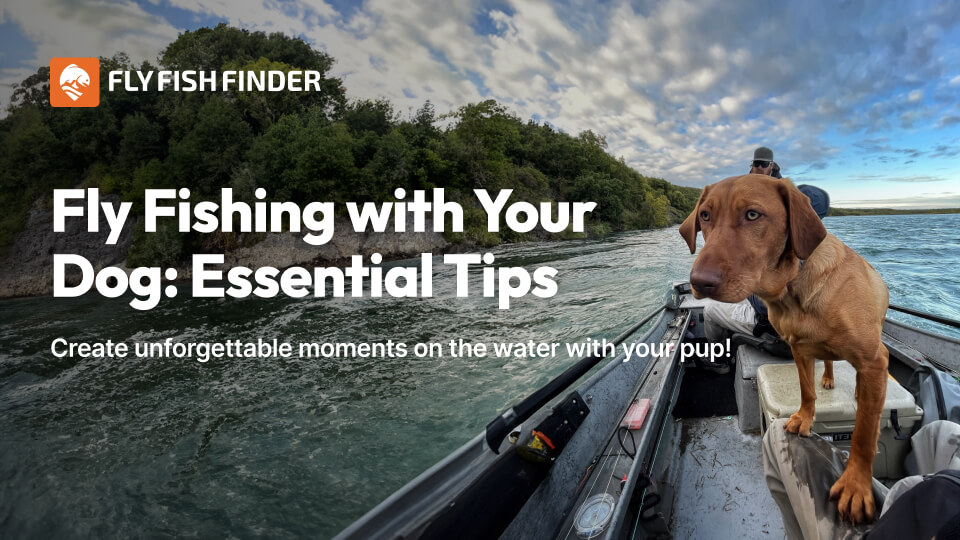

There’s nothing quite like sharing the joy of fly fishing with your canine companion. For many anglers, their dog isn’t just a pet—it’s a loyal partner and the perfect companion for outdoor adventures. However, fly fishing with dogs comes with responsibilities. Practicing proper etiquette ensures not only a great experience for you and your pup but also for fellow anglers and the surrounding environment.
I personally love taking my pup, Olive. She’s a sixty-five-pound sheepadoodle and is definitely my buddy. However, she has limitations. Now the past 5 months she has improved greatly but she is 3 now and up until the last 5 months I haven’t worked with her much on the river.
10 Tips to Fly Fishing With Dogs
1. Know Your Dog’s Temperament
Not all dogs are suited for fly fishing. Before taking your dog to the water, consider its temperament. Does your dog enjoy being outdoors for long periods? Can it stay calm and quiet when needed? Dogs that are overly excitable or prone to barking might disrupt the peaceful environment others are looking for. That’s a nice way of saying, be respectful nobody wants to hear your dog whining in the boat, barking at wildlife, etc.
Pro Tip: Test your dog’s behavior in quieter fishing spots before heading to more crowded or sensitive areas.

2. Train Basic Commands
Your dog should reliably respond to basic commands like “sit,” “stay,” and “come.” These commands are crucial for keeping your dog under control near the water, ensuring its safety, and preventing it from disturbing your fishing setup or other anglers. Reliability is key. Repeating yourself several times in desperation isn’t reliable.
I personally, prefer taking Olive out for walks on the water. These walks are intended to train and relax. I try to take treats for rewards but if I forget I swap out treats for lots of verbal rewards and lots of pats and hugs. Fishing isn’t on my mind, instead, we go out on a mission to train right from wrong, listen to commands, and have fun spotting fish.
Pro Tip: Use positive reinforcement during training, and consider practicing in outdoor settings to simulate real fishing scenarios.
3. Respect Other Anglers
When fly fishing in shared spaces, be mindful of others who may not appreciate the presence of a dog. Keep your dog leashed or under voice control to prevent it from wandering into another angler’s space, splashing in their fishing spot, or disrupting their experience.
Look it is a shared space and given you aren’t breaking the law, you and your pet have the same entitlement to the space as others. However, that does not mean that you shouldn’t error on the side of caution and respect. That all starts with having control of your pet. Trust me you will avoid a ton of unnecessary confrontations.
Pro Tip: Give other anglers plenty of space and be ready to relocate if your dog becomes a distraction.
4. Protect the Environment
Dogs can unintentionally damage fragile ecosystems if not properly managed. Avoid letting your dog trample streamside vegetation, dig near the banks, or chase wildlife. These actions can harm habitats, disrupt spawning grounds, and stress local fauna.
Look dogs are animals and they want to get into things. This is especially true when you are exposing them to new things. It’s your responsibility to help them manage their behavior and establish discipline when needed.
Pro Tip: Keep your dog on a leash, by your side, and most importantly within your vision and control to minimize its environmental impact.
5. Clean Up After Your Dog
One of the most important aspects of fishing etiquette with a dog is leaving no trace. Always carry waste bags and clean up after your dog. Proper disposal ensures you’re respecting the environment and the experience of those who come after you.
This is a personal pet peeve of mine. When you bag your dog’s crap, carry it out! Do not put your dog’s excrement into a bag and set it off to the side like you are going to grab it on the way out. The fact is that you will likely forget. Instead, everyone else has to look at a bag of crap on the side of the road, path, etc. for weeks to come. It’s not acceptable in my opinion.
Pro Tip: Pack a small, sealable container for waste to make it easy to carry out, even on longer outings. It’s simple, a zip lock bag that goes in your pack is easy to deal with.
6. Bring Dog-Specific Gear
Just as you gear up for a day on the water, your dog needs the right equipment too. Bring a collapsible water bowl, plenty of fresh water, and snacks for your dog. If the weather or terrain is extreme, consider protective boots or a dog-specific life jacket.
These items are not a must but they are an easy way to be considerate of your pal. Olive doesn’t need much so I make sure she has a collar with a name tag and I like to bring treats for rewards.
Pro Tip: Pack a towel to dry off your dog and a blanket for it to rest on the way home.

7. Monitor Your Dog’s Well-Being
Fishing trips can be long and physically demanding for your dog. Pay attention to signs of fatigue, overheating, or discomfort. Always provide shade, water, and breaks as needed to keep your pup happy and healthy.
Pro Tip: If your dog seems restless or tired, it might be time to call it a day.
8. Plan for Emergencies
While rare, accidents can happen on fishing trips. Be prepared with a basic first aid kit for your dog, including supplies for treating minor cuts, insect bites, or heat exhaustion. Knowing the location of the nearest vet or pet-friendly emergency clinic can also give you peace of mind.
I do bring salve for the dog’s feet. This can be especially nice in desert creeks where there is plenty of in and out of the water on stone that can chew up their pads.
Pro Tip: Keep a leash and ID tags on your dog at all times in case it gets separated from you. Airtags have become common location devices. Keep in mind that these aren’t excuses to let them run wild and out of control.
9. Know the Rules
Before heading to your fishing destination, check local regulations regarding dogs. Some fishing areas, especially in national parks or private lands, may have restrictions on dogs. Knowing the rules ahead of time ensures you won’t run into issues.
Pro tip: Utilize the FlyFishFinder fishing app to locate access areas and spots you can fish with your dog.
10. Enjoy the Bond
Finally, remember that fly fishing with your dog is about more than catching fish—it’s about creating memories and enjoying the outdoors together. Take the time to appreciate the little moments, whether it’s your dog’s excitement at the sound of the water or the quiet companionship they offer as you cast your line.
Olive loves the water and I love seeing her enjoy it. One of our favorite moments is sharing the catch. She loves sniffing and giving the fish a gentle lick right before release. I’ve had plenty of memories in warm and cold weather and I look forward to many more.
Check out this awesome video by Huge Fly Fisherman over on youtube:
https://www.youtube.com/@HugeFlyFisherman
Final Thoughts
Fly fishing with your dog can be an incredible experience if done with care and consideration. By practicing proper etiquette, respecting others and the environment, and prioritizing your dog’s well-being, you’ll ensure that every trip to the water is enjoyable for both of you.
With the correct control and consideration of others, you surely find more friends for your pet and inspire others with your command and control.
So grab your gear, leash up your dog, and head out to create unforgettable moments on the water!