


By Christian Bacasa, Host of the Fly Fishing Insider Podcast and FlyFishFinder™ Chief of Sales and Marketing
I’ve written another article on this subject for the Fly Fishing Insider Podcast and Blog because it is so important. As any seasoned angler will tell you, achieving the perfect drift is the holy grail of fly fishing. It’s the difference between spooking every fish in the pool and tricking even the most cautious trout into taking your fly. When I first started fly fishing, I struggled to understand why fish ignored my meticulously tied flies. It wasn’t until a guide on the Provo River pointed out my “drift issues” that things began to click—especially my micro-drag problems.
This guide is all about mastering the drift and ensuring your fly behaves naturally as it glides through the water. Let’s dive in.
What Is a Drift?
In fly fishing, the “drift” refers to the way your fly travels on the water. A perfect drift mimics the natural movement of an insect in the current, duping fish into thinking your fly is the real deal. The key challenge lies in avoiding drag, which occurs when the fly line or leader pulls the fly unnaturally through the water.
Drag often results from differing current speeds across the river. For example, if your fly line is caught in faster water while your fly is in slower water, the tension will pull your fly unnaturally. Fish pick up on this in an instant and will avoid your fly entirely.
Techniques for a Perfect Drift
1. Mending the Line
Mending involves flipping your fly line in the correct direction after your cast to eliminate drag. This technique allows your fly to drift naturally in the current. The key is ensuring that you add a bit of slack or put your line that is on the water in position so it is not pulling your fly unnaturally.
Example Scenario: You’re fishing a wide riffle with a visible seam where fast water meets slow water. You cast across the seam, and as the current pulls your line downstream, a quick upstream mend ensures your fly stays in the slower current, drifting naturally. I’ve used this technique to great success on Montana’s Bear Trap Canyon, where fish often hold in these seams waiting for food to drift by.
2. Positioning and Angles
Where you stand and cast has a huge impact on your drift. Position yourself so you’re casting at an angle that minimizes drag, often upstream or across-stream.
Example Scenario: On a small stream in Pennsylvania, I encountered a pod of rising trout just below a fallen log. Standing downstream and casting upstream at a slight angle allowed me to control the drift perfectly. Watching my fly drift naturally over the rise forms, I hooked into a beautiful 16-inch brown trout.
3. Using a Reach Cast
A reach cast is an advanced technique where you extend your rod and line upstream during the cast, preemptively setting up a drag-free drift. It’s technically a mend but an aerial mend as it occurs before your line hits the water.
Example Scenario: On Utah’s Green River, casting to rising trout in a back eddy required a reach cast to keep the line out of conflicting currents. This slight adjustment resulted in several takes from wary fish that would have otherwise ignored my fly.
4. Adjusting Leader and Tippet
Sometimes, the issue isn’t your cast but your setup. Most believe that longer leaders and finer tippets allow for more natural drifts, especially in tricky conditions. However, some say short leaders and short casts can have excellent results because you have less line on the water.
Example Scenario: I was fishing a spring creek in Idaho with crystal-clear water and finicky trout. Switching to a 12-foot leader with 6X tippet allowed my dry fly to land softly and drift naturally, leading to an unforgettable day of consistent takes.
Real-Time Drift Adjustments
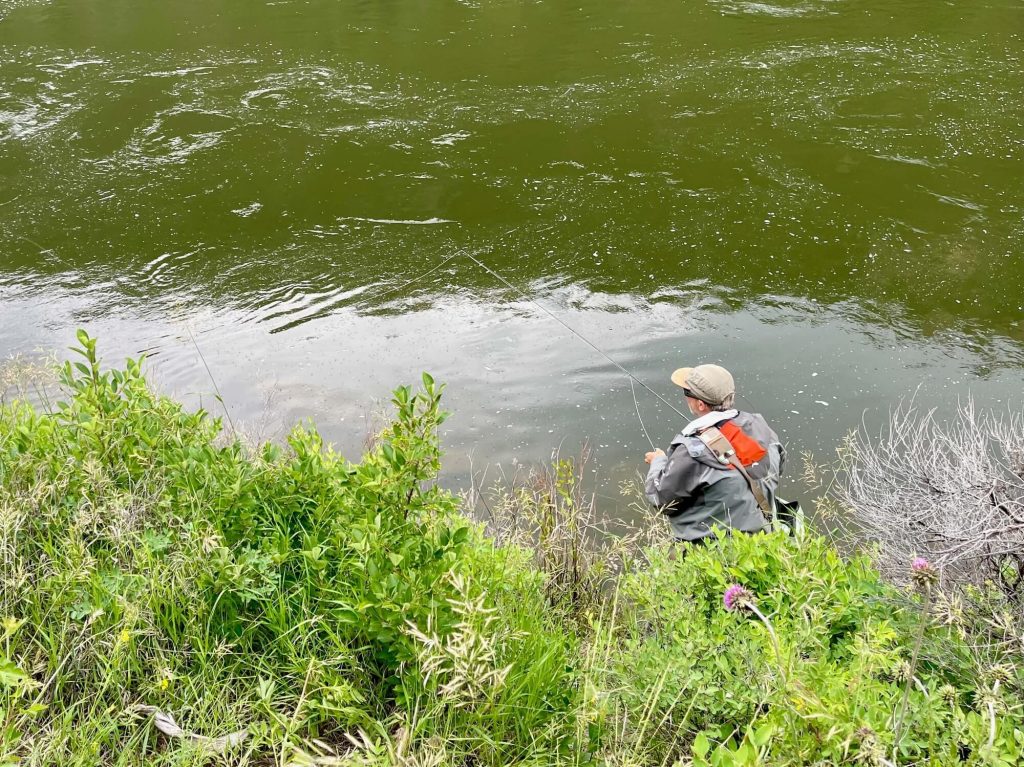
Drift perfection doesn’t end with the cast. You must monitor your line and fly throughout the presentation. Watch for subtle signs of drag, like unnatural ripples near the fly or sudden changes in speed. Adjust as needed with minor mends or by repositioning your rod.
Streamside Challenges and Solutions
Challenge: Complex Currents
Streams with multiple current speeds can make achieving a drag-free drift feel impossible.
Solution: Focus on fishing smaller sections of water where the current is more uniform. Alternatively, use a reach cast combined with multiple mends to extend your drift. Try high-sticking methods and alter your leader lengths. I prefer a mid-length leader that allows me to hold the fly line off the water with shorter casts.
Challenge: Windy Conditions
Wind can wreak havoc on your fly line, creating drag before your fly even hits the water.
Solution: Keep your casts low to the water and use heavier flies to counteract the wind’s effect. I once managed to catch a brook trout on a blustery day in Utah by switching to a weighted nymph in a dry dropper scenario and shortening my cast.
Even more importantly learn a cast with a single or double haul so you can increase your line speed. Increased line speed will allow your line to cut through the wind, extend, and lay out more effectively.
Practice Makes Perfect
No angler masters the drift overnight. It takes time and practice to develop the instincts and techniques needed to adjust to varying stream conditions. Spend time experimenting with different mends, casts, and leader setups. Keep a mental journal to record what works on different waters. However, as you mature and add moves to your repertoire, work on making that first cast count.
Conclusion
Achieving the perfect drift is one of the most rewarding skills in fly fishing. It’s a dance between you, the current, and the fish. When done right, it’s pure magic. Whether you’re fishing a remote backcountry stream or a heavily pressured tailwater, mastering the drift will dramatically increase your success.
Take it from me—there’s no better feeling than watching your fly drift naturally toward a feeding fish and seeing the subtle flash as it takes your offering. It’s moments like these that keep us coming back to the water.
Happy fishing, and may your drifts always be drag-free!
Learn more by reading that other blog post and leveraging the cheat sheet I created.
Formula for Systematizing Your Cast for a Perfect Drift


