
Fly tying is one of the best parts of fly fishing. As fly fishermen, we are always looking to find ways to enhance the hobby for ourselves. Fly tying is a great way to take the next step and grow even closer to the fish you are catching.
Whether you are just picking up the sport of fly fishing or you are a seasoned veteran, it is never too late or too early to start fly tying. Fly tying takes a certain level of skill and patience, much like fly fishing itself does.
Fly tying for beginners is a daunting undertaking. There are many materials and methods that you could employ. The number of videos available with a variety of instructions can be intimidating. Here we will give you the tips to make the entrance into fly tying much easier.
What Is Fly Tying?
Simply put, fly tying is the construction of flies. Flies are a combination of natural and synthetic materials that are literally tied onto a hook using thread. It is a wonder that these little constructions can withstand so much punishment. It is a testament to the skill that is fly tying.
The various types of fly tying materials are meant to mimic different aspects of different prey for gamefish. Additionally, various materials act differently in the water, allowing you, as the creator, to use different combinations to make interesting and realistic flies based on the motion you would like the fly to make underwater.
What Gear Do I Need?
Fly tying in its simplest form consists of a vice to hold the hook, a bobbin for the thread, a bobbin threader, scissors, a whip finishing tool, and some head cement or glue. Once you have these basic pieces of gear, you are ready to start tying flies.
When fly tying as a beginner, it is best to keep the gear simple and focus on the task at hand. There are several items you can add to your gearbox over time, but they only distract from the task of fly tying.
Once you have mastered the basics, you can branch out with the different types of materials you use, upgrade your vice, and add tools that allow you to sculpt your flies in a way that you would otherwise be unable to.
How Do I Get Started?
There are many great resources to help you get started as a beginner fly tyer. Most notably, fly shops often host fly tying nights that allow anglers of all levels to come together and learn the craft. It is always easier to watch someone tie flies in person. Watching how someone moves their hands and adjusts their thread is invaluable.
These types of events are often free and are also a great way to meet other local anglers. However, there are also paid classes that can provide much more regular, hands-on, and expert experience. Paid classes increase the focus on you as the beginner fly tyer allowing you to advance your skills quickly.
Videos also provide great instruction when you are learning to tie flies. They may not provide the same hands-on instruction as an in-person instructor, but they are easier to follow than written material or photos.
At the end of the day, the best way to get started is to tie a lot of flies. Let’s face it, your first few flies are likely to be terrible. Mine sure were. However, once you start to hone in the craft, you will notice your confidence will grow, and the flies will start to look like something you bought at the store.
What Type Of Flies Should I Tie?
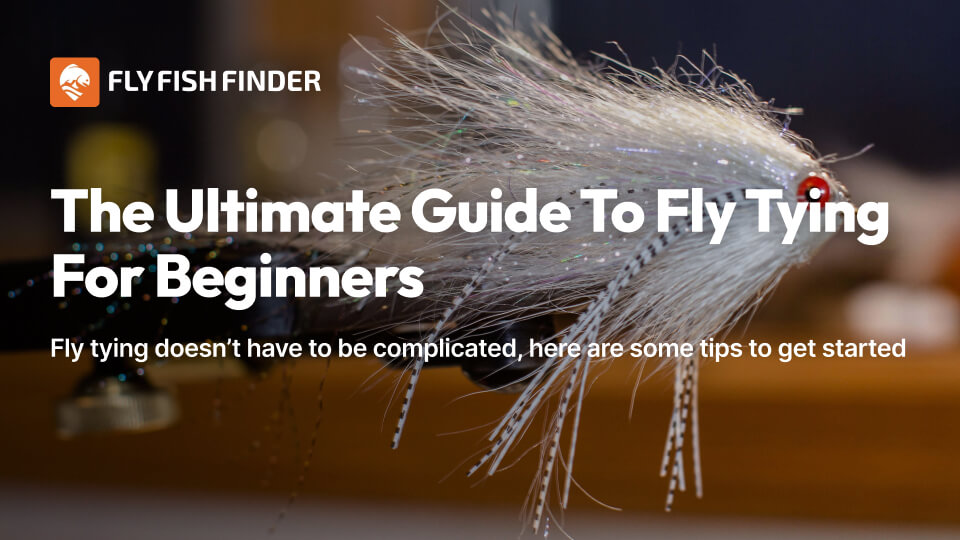
When you are a beginner fly tyer, streamers are the easiest flies to tie. For more information on recommended streamer patterns for beginner trout fly fishermen, check out this article.

Streamers are simple to tie because they are often large and thus, are easy to handle. They are a great place to start for fly fishermen who may not have the best dexterity and streamers can be used on all types of water. Additionally, simple streamer patterns do not require much detail. As such, making mistakes does not render a fly “unfishable”.
Making mistakes on nymphs and dry flies can be extremely detrimental to your chances of catching fish. Making mistakes on streamers can sometimes be innovative. You never know when fish are going to go crazy for an out-of-place piece of flash or a tail tied in one way or another.
Once you master streamers, it is much easier to move on to other types of flies. Poppers, nymphs, and dry flies are the logical next step.
Poppers have a lot of moving parts but the room for creativity is endless. People often paint poppers with different patterns and use a variety of materials to make poppers mimic amphibians, insects, or injured fish.
Nymphs and dry flies are generally small and detail-oriented. They are the most difficult flies to tie and take a long time to master. The thread is small and can be difficult to work with. These flies take extra care and should be attempted once you have a great fundamental handle on fly tying.

Ready To Tie?
Fly tying is arguably the most rewarding part of this hobby. It is a great way to be social while also filling your fly box with items that you can be proud of. I have witnessed fly tying bring people together. After all, you do not need to be a fly fisherman to enjoy tying flies.
Your next step is to simply go out and tie. There are a variety of great beginner fly tying kits out there that you can use to get yourself going. A personal favorite is the Loon Kit as it gives all the essential tools you need, and you can go supplement from here. These kits often come with materials in addition to all the tools you will need initially. Start tying flies and you will not regret your decision.
If you’re getting into fly tying, you should also consider getting into putting those flies to good use! Here is an article from Christian discussing how to find new water and get out exploring more this year!