
Urban fly fishing is one of the most overlooked aspects of fishing. In some ways, there are just as many opportunities to catch fish in the most rural areas of Montana as in Central Park in New York City.
Humans tend to view themselves as separate from the environment. However, the urban environment is an environment in itself. Because it is heavily altered does not mean no animals live there.
During my college days, I did not have the budget to pay for the gas to drive expansive distances in search of trout. I had to get creative and find spots in cities and neighborhoods. As someone who grew up fishing pristine western trout streams, finding fish in a concrete jungle was a surprise to me. As such, given that most Americans live in cities, let’s check out five tips that could help you find fish minutes from your house.
1. Follow Structure
Many rivers that run through cities are flanked by human-made structures such as bridges, railroads, and buildings. These structures may look “unnatural” but fish do not always know the difference. Does the structure provide some level of cover, refuge, or alter the water flow? If so, then fish are likely going to hold there.
Human-made structures are perfect areas for fish to corral prey. They function similarly to boulders and fallen trees. Depending on the layout of the structure, there may be fish-sized hiding spaces that mimic vegetation or log structure. These structures allow fish to stay out of sight from predators and ambush prey. Many structures will also provide shade that can help keep fish cool and out of sight of overhead predators such as birds and mammals.
Culverts and water crossings are also great areas to target. Bait and other food are funneled through the crossing in a condensed manner. Predator fish will sit on the downstream end of the crossing waiting for this superhighway of food to be easily delivered. Crossings can be an absolute hot bed for various fish species.
Don’t be afraid to think outside the box when searching for structure. Anytime you see a hard structure in the water, cast a line into that area and see what happens. Observe how the structure alters flow if you are fishing on a river and fish the applicable seams. Just like in most fishing situations, structure is going to be your friend.

2. Practice Technical Fishing
Urban fly fishing does not always have the most ideal casting environment. Improving your ability to make technical casts under human-made structures, from heavily vegetated paths, and at odd angles will improve your ability to catch fish.
Play with stopping your rod at different points during your cast. Altering the stopping position on the forward cast changes the trajectory of the line and enables you to dodge hazards that would otherwise cause you to snag.
Getting comfortable with trying different types of casts will also pay dividends. One of the most popular casts in tight quarters is the bow and arrow cast. This cast is accomplished by pulling the fly back with your non-casting arm to load the road and releasing it in the direction of your target.
Spey casting is also an option in these scenarios. I personally prefer one-handed spey casting. I grew up spey casting for steelhead in Washington state and one-handed spey casting was a part of the game if I ever found myself using a one-handed rod.
3. Understand Local Waters Laws
This is a subtle yet important piece of urban fly fishing. Understanding how to navigate water and who owns water is important. This is especially significant in coastal cities where there might be saltwater that runs through the city.
The water rights from the land under the water all the way through the riparian area (area along the riverbank) can show you where you may or may not be trespassing. In saltwater, the land below mean high tide is public land but there may be nuances to your ability to access that land.
Knowing your water rights will help you stay out of trouble and can help guide you to more areas by steering clear of certain areas. The FlyFishFinder app has stream regulations across thousands of streams in the US, as well as some additional state access laws for waterways and land access while fishing. These laws are subject to change from time to time so cross referencing local district offices would be beneficial.
4. Make Use of Local Data
Just like any fishery, local data is your best friend. Asking local fly shops, fellow anglers, and consulting forums is a great way to figure out where to go and what to throw. Urban fly fishing is a niche, but there are still plenty of anglers in urban environments who swear by it.
Once you have a good idea of a few places to start, you can branch out. Use your knowledge of reading water to determine where else you can try to dip a line. The possibilities can be endless in an urban environment, you just must be willing to search for them.
Because urban fly fishing environments are generally less expansive than larger, more natural environments, you will often run into other anglers on the water. Stay friendly with them and you may be able to glean information. During my college days, I met several anglers at recurring spots. Over time we got to know each other and running into them became a friendly experience. These types of relationships can very much enhance your fishing experience in more ways than one.
5. Use the FlyFishFinder App
The FFF app is here to help you find water and public access on your next urban fly fishing adventure. It is your one-stop shop for viewing streams, from trout streams to bass and carp warmwater rivers, all in one place on your phone. It can help you turn your attention to certain parts of your city or state. Most importantly, it will tell you the difference between private and public land. The app will keep you on the right track and ensure you are not trespassing.
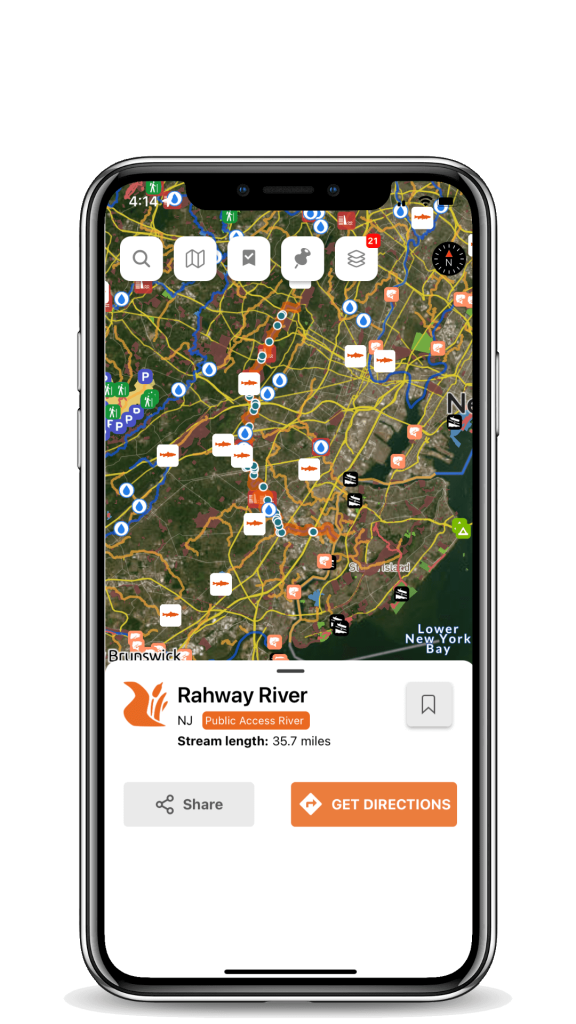
You will have access to boat ramps, designated fishing areas, and more within the FlyFishFinder app. Mastering urban fly fishing means that it is imperative that you know where these locations are. Frankly, the app would have been a huge bonus for me during my college days. Try it out to supplement the other tips outlined in this article.
Check out this urban fly fishing tips video by the man himself, Tom Rosenbauer for some serious inspiration to get out exploring.

Here is a solid read for more urban fly fishing tips from the good guys at Gink & Gasoline.