Maryland Fly Fishing

5 Best Flies for Trout in Maryland

The patterns worth carrying for the Gunpowder, Savage, North Branch Potomac, Big Hunting Creek, and the small mountain streams out west.

See Access Points + Live Flows for Maryland Rivers →
✓ Free to join · No credit card

Maryland is not a big state, but the trout fishing is real. The Big Gunpowder Falls below Prettyboy Dam is a well known tailwater near Baltimore. Out west you have the Savage River and the North Branch of the Potomac. Big Hunting Creek in Frederick County rounds out the waters that the Maryland Department of Natural Resources points fly anglers to.

These waters hold mayflies, caddis, stoneflies, and midges, and the DNR says nymphs are a good place to start. Spring brings some of the best dry fly action, with sulphurs a big deal on the Gunpowder. Here are five flies that cover most of it. Special rules apply on several of these waters, so check the Maryland DNR guide before you go.

The 5 Essential Maryland Fly Patterns

Picked for the waters and hatches anglers here actually run into.

Pattern #1

Sulphur Comparadun

Dry Fly
Sizes#14 – #18
ColorsPale Yellow, Sulphur Orange
SeasonMid-May through June
TechniqueDead drift, evening hatch

The sulphur hatch is the best known dry fly event on the Gunpowder. Local shop reports put it from about mid-May into June, and evenings, just before dark, are often best. The Comparadun is a classic way to fish it.

Its flat, low profile sits in the film, and trout that have seen plenty of flies tend to take it. Sulphur orange also shows up on the DNR's suggested dry fly colors for Maryland trout.

Pro Tip: Be patient on the long, flat pools of the Gunpowder. Use a long, light leader and make a few good casts to a rising fish instead of many quick ones.
Pattern #2

Elk Hair Caddis

Dry Fly
Sizes#14 – #16
ColorsTan, Olive, Brown
SeasonSpring through fall
TechniqueDead drift, light skitter

The Maryland DNR names the Elk Hair Caddis as one of two dry flies every fly angler should carry. Orvis lists it as a must-have for the Savage River in #14 to #16.

Caddis show up on most of the state's trout water. The fly floats well in riffles and runs and works as a searching pattern when you do not see rising fish.

Pro Tip: If fish are rising but ignore a dead drift, add a tiny twitch at the end of the drift. It can look like a caddis trying to leave the surface.
Pattern #3

Parachute Adams

Dry Fly
Sizes#12 – #18
ColorsGray body, White post
SeasonYear-round
TechniqueDead drift

The Adams is the other dry fly the Maryland DNR says every angler should have. The parachute version is easy to see and sits low in the water. Orvis lists it for the Savage in #12 to #16.

It does a decent job as a general mayfly. Use it on the Savage, the Gunpowder, Big Hunting Creek, and the small mountain streams when you are not sure what is hatching.

Pro Tip: On smaller streams, size down and shorten your casts. On mild winter days, a small Adams can still take fish during a midge or blue-winged olive hatch.
FlyFishFinder App · Now on iOS + Android

Real water data.
Better decisions.

Top 10 fishable streams near you
Ranked in real time from live gage data
Score any gage on demand
Flow and gage height for Maryland rivers
Bite forecast built in
See the best days and times to go
Scan to get the app free
Get the app free
iPhone + Android · No credit card.
Gunpowder Falls
at Glencoe, MD
58 cfs
→ steady
Today's rating is in the app
Flow
58 cfs
Live USGS reading
Gage height
0.74 ft
7-day trend
Live USGS gage data
Open gage →
Pattern #4

Pheasant Tail Nymph

Nymph
Sizes#12 – #18
ColorsNatural, Copper bead
SeasonYear-round
TechniqueIndicator or tight-line nymphing

The Maryland DNR says trout feed mostly on drifting nymphs all year, so nymphing is a good place to start. It lists the Pheasant Tail and Hare's Ear in #12 to #18 for mayfly nymphs.

That makes the Pheasant Tail a solid pick on the Gunpowder, the Savage, the North Branch, and Big Hunting Creek. It is also a good dropper under a dry fly.

Pro Tip: Try a dry-dropper rig. Tie a Pheasant Tail 18 inches or so behind a Parachute Adams or Elk Hair Caddis and fish both at once. The dry fly also acts as your strike indicator.
Pattern #5

RS2

Emerger
Sizes#20 – #22
ColorsGray, Olive
SeasonYear-round, handy in cold months
TechniqueDead drift just under the surface

The Savage River tailwater stays cold and can be fished through the year. Reports describe blue-winged olives and midges drawing fish to the surface even in winter, and one western Maryland blog had a size 22 RS2 working on BWOs.

The RS2 is a tiny emerger that suggests both. It is a handy fly when trout are rising but will not take a regular dry.

Pro Tip: Fish it as a dropper behind a larger dry fly, or on its own with a long, fine tippet. Early morning and late afternoon under overcast skies are good windows.

Maryland Fly Fishing Questions

What is the best fly for trout in Maryland?

The Elk Hair Caddis and the Parachute Adams are two flies the Maryland DNR says every fly angler should carry. For nymphing, a Pheasant Tail or Hare's Ear is a good start. On the Gunpowder in late spring, add a Sulphur Comparadun.

What flies work on the Gunpowder River?

Sulphur patterns in #14 to #18 are a favorite from about mid-May into June, and Comparaduns are a popular choice. Soft hackles and Hare's Ear nymphs also show up in local reports. Pheasant Tails and Adams cover much of the rest of the year.

When is the best time to fly fish for trout in Maryland?

Trout fishing in Maryland is open year-round on most waters. The DNR says trout fishing is best when water is below about 65 degrees, so spring, fall, and winter are strong choices. The Savage tailwater can be fished most of the year. Check the DNR guide for any seasonal closures or rules.

Do I need a license to fly fish for trout in Maryland?

Most anglers 16 and older need a Maryland non-tidal fishing license. Stamps, special area rules, and limits can change, so check Maryland DNR for current requirements. Gunpowder Falls, the North Branch Potomac, and Big Hunting Creek include catch-and-return areas, and the Savage River has trophy and fly-only sections.

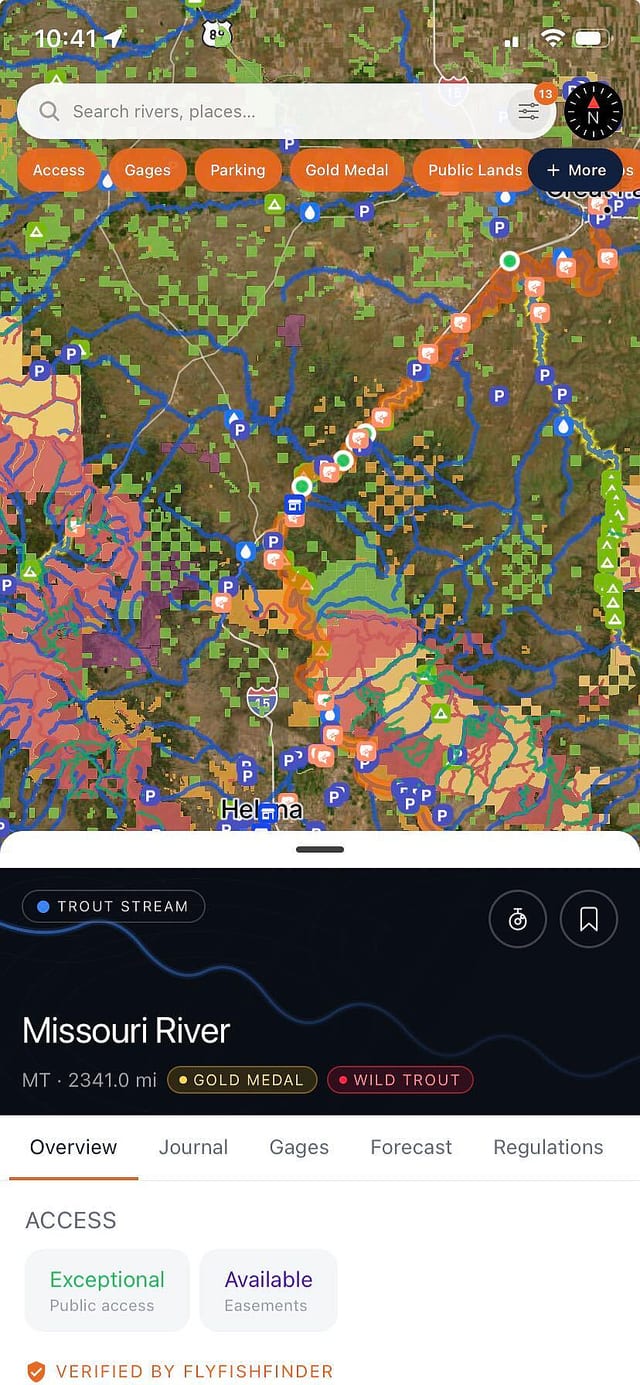
FlyFishFinder app map for Maryland rivers

Know Before You Go

Check flows and prime windows for Maryland rivers in one place. Free to join, no card needed.

Free. Unsubscribe anytime.
Prefer the app? Open the map →