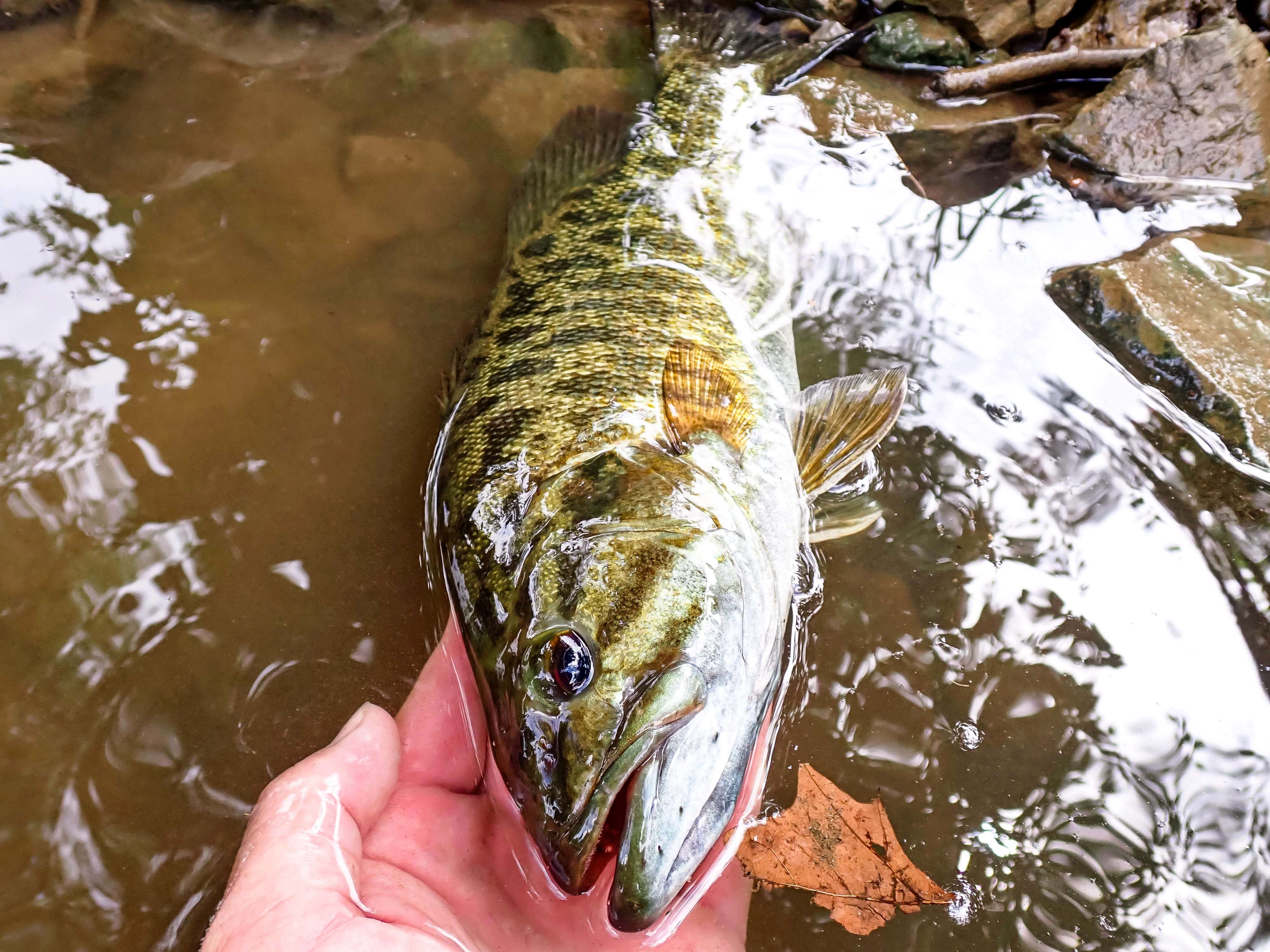
Maine’s three major river systems — the Kennebec, Androscoggin, and Penobscot — rank among New England’s finest big-river smallmouth bass fisheries. These are powerful, rocky rivers draining vast northern watersheds, and the smallmouth bass they hold are well-conditioned, hard-fighting fish that average larger than those in most New England states. The season runs from June through September, with peak action in late June and July when post-spawn fish are feeding aggressively in water temperatures between 65–75°F.
All three rivers demand a boat for efficient access to the best water — the Kennebec and Penobscot in particular are large, fast rivers where wading is limited and the prime structure requires covering significant current distance to reach. A 7-weight rod with 1X tippet is the appropriate setup for Maine’s big-river smallmouth — the fish are larger than average, the currents are strong, and the rocky structure requires tippet strength. Clouser Minnows and large Deceivers are the go-to patterns, with sink-tip lines adding depth capability on the deeper runs.
Ranked by fly fishing character, access, and seasonal opportunity.
River #1
Best SeasonJune – Sept
Top FliesClouser Minnow, Woolly Bugger
Leader / Tippet1X tippet
The Kennebec River is Maine’s most accessible and best-known smallmouth fishery — a large, powerful river flowing from Moosehead Lake south through Augusta to the coast. The middle Kennebec, particularly the stretch from Solon downstream through Bingham and Skowhegan, offers outstanding smallmouth bass fly fishing in a spectacular river setting. The river’s size, powerful current, and rocky ledge structure demand a boat for efficient access, but the rewards are proportional — fish averaging 14–17 inches are common, and the Kennebec produces more trophy smallmouth over 20 inches than any other Maine river.
Clouser Minnows in chartreuse/white or olive/white are the Kennebec’s most reliable producers — work them through the current seams below the river’s numerous rock ledge formations and along the gravel bars that line the main channel. Woolly Buggers in black or olive produce well in the deeper, slower pool sections. Use 1X tippet on the Kennebec — the fish are large, the current is strong, and lighter tippet creates unnecessary risk around the river’s abrasive rocky structure.
Pro Tip: The Kennebec River’s ledge formations are the key summer smallmouth structure — visible as surface boils in medium flows, these submerged ledges create current breaks that hold fish on their downstream faces. Anchor your boat upstream of a ledge and cast a Clouser Minnow to sink through the ledge’s downstream face, then strip it back through the eddy. This technique consistently produces the river’s largest fish, which hold in the quiet water immediately downstream of each ledge.
River #2
Best SeasonJune – Sept
Top FliesStreamer, Popper
Leader / Tippet1X–2X tippet
The Androscoggin River flows from Umbagog Lake on the New Hampshire border south through Rumford, Lewiston, and Auburn before joining the Kennebec below Brunswick. The lower Androscoggin — particularly the stretch from Rumford through Mexico and below the Auburn-Lewiston dam complex — holds strong smallmouth populations in a big-river setting with rock ledges, rapids, and deep pools. The river’s improved water quality over the past three decades has transformed it from an industrial river to a genuine sport fishery, and smallmouth populations continue to grow.
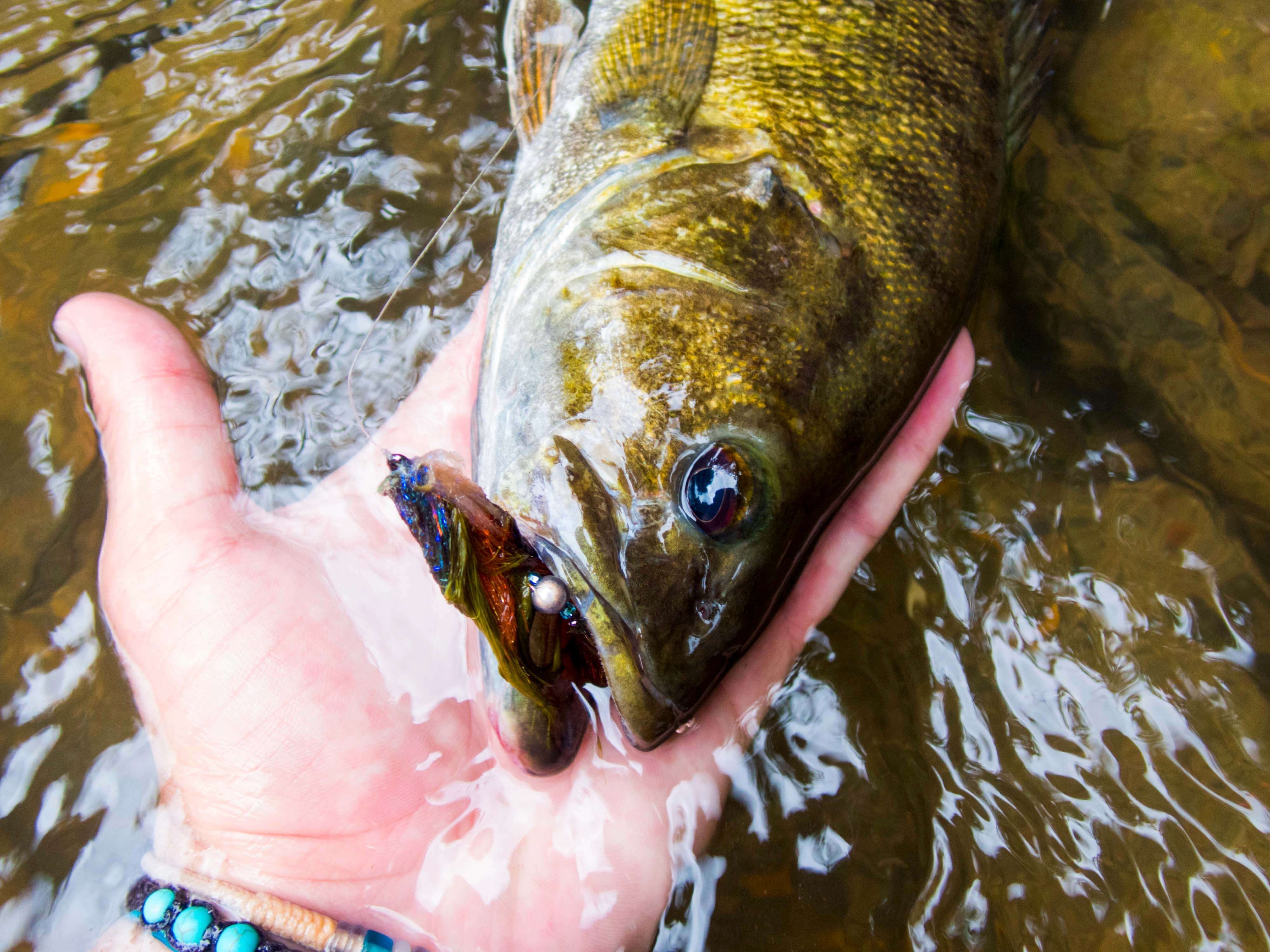
Streamers and poppers are the Androscoggin’s most productive fly choices — large articulated streamers produce the biggest fish in the deeper, faster sections, while poppers earn their keep on the slacker water behind islands and in the calmer pool sections on summer evenings. The Androscoggin’s size and power require boat access for most productive water; several launch sites along Routes 2 and 4 provide float access to the river’s best sections. Use 1X–2X tippet on the Androscoggin to handle its larger-than-average fish population.
Pro Tip: The Androscoggin’s rocky rapid sections — particularly in the Rumford and Mexico areas — hold the river’s highest concentrations of smallmouth. Float these sections in a canoe or drift boat and target the fast water immediately below rapids and the deep pools at the base of each drop. Bass stack in these oxygenated zones throughout the summer, and a large streamer stripped through the current seam will encounter fish at almost any hour of the day.
River #3
Best SeasonJune – Sept
Top FliesDeceiver, Clouser Minnow
Leader / Tippet1X tippet
The Penobscot River system — Maine’s largest river watershed — offers smallmouth bass fly fishing on a grand scale, with the main stem and West Branch providing miles of accessible water through some of Maine’s most dramatic northern landscape. The lower Penobscot from Mattawamkeag downstream, and the West Branch from Chesuncook to Medway, hold strong smallmouth populations in big, powerful river water. The river’s remoteness and size mean it sees relatively light fly fishing pressure compared to the Kennebec, and fish are correspondingly aggressive.
Deceivers and articulated streamers are the most effective flies on the Penobscot’s larger water — the river’s size and current depth demand larger patterns fished on a sink-tip line to reach the fish holding along the bottom of the deeper runs. Clouser Minnows cover the shallower rocky sections and riffle-to-pool transitions effectively. The Penobscot’s most accessible smallmouth water is downstream from Old Town, where the river broadens and numerous public boat launches provide access to the best current structure.
Pro Tip: The Penobscot’s confluence with major tributaries — the Piscataquis, Passadumkeag, and Mattawamkeag rivers — create exceptional smallmouth habitat where two currents meet and baitfish concentrate. Position your boat in the eddy downstream of each tributary mouth and work a Deceiver or large Clouser through the mixing currents — these confluence zones hold the river’s largest smallmouth and provide the most consistent trophy-class fishing opportunities on the entire system.
Maine Smallmouth Bass Fly Fishing — Frequently Asked Questions
What is the best time of year to fly fish for smallmouth bass in Maine?
The prime season for smallmouth bass fly fishing in Maine runs from June through September, with peak action typically in late June through August when water temperatures reach the 65–75°F range that smallmouth prefer. Maine’s bass season typically opens June 1 on most rivers. The Kennebec and Penobscot can fish well into late September as their large volumes maintain temperatures longer than smaller rivers.
What flies work best for Maine smallmouth bass?
Clouser Minnows and large streamers are the workhorses for Maine smallmouth, covering the most water and conditions on the state’s big river systems. Poppers deliver exciting surface strikes on warm evenings on the Androscoggin’s calmer pool sections. Woolly Buggers in black or olive produce well in the deeper, slower sections of all three rivers. For a complete Maine smallmouth kit, carry Clouser Minnows in chartreuse/white (#2–4), large Deceivers or articulated streamers, a Woolly Bugger, and a foam popper for evening action.
Do I need a fishing license to fly fish for smallmouth bass in Maine?
Yes. Maine Department of Inland Fisheries and Wildlife requires a fishing license for all anglers 16 and older. Non-resident licenses are available in annual and short-term formats. Maine’s bass season typically opens June 1 and runs through November 30 on most waters, though specific regulations vary by river segment. Always verify current MDIFW regulations for the river you plan to fish, as some sections near migratory fish runs may have special restrictions.
What gear do I need for fly fishing Maine smallmouth bass rivers?
A 7-weight fly rod is recommended for Maine’s large river smallmouth systems — the Kennebec, Androscoggin, and Penobscot all demand larger flies and stronger currents than a 6-weight handles comfortably. Use 1X tippet as standard — Maine smallmouth run larger than most states’ fish, and the rivers’ abrasive rocky structure increases the need for tippet strength. A sink-tip line is valuable on the Penobscot and Kennebec for reaching fish in the deeper runs; a weight-forward floating line handles the shallower sections and popper fishing.