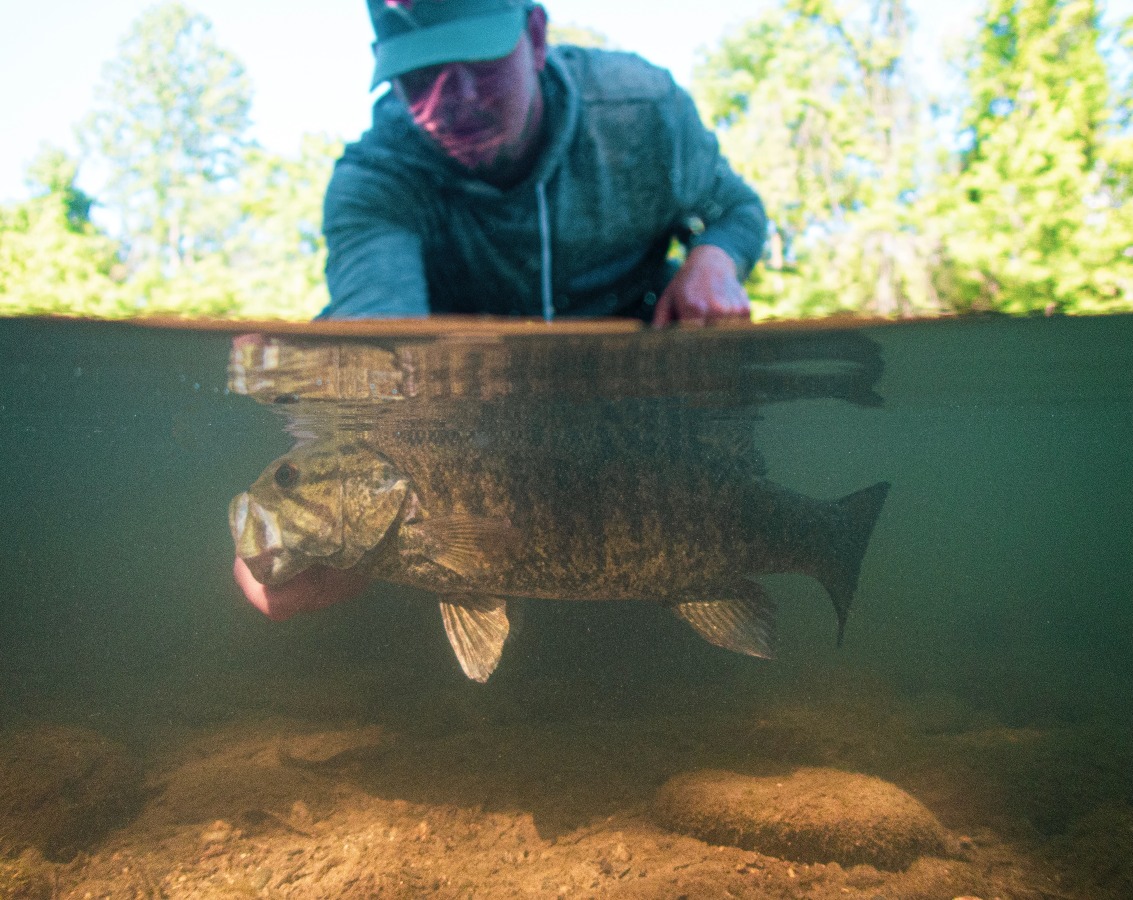
New York’s smallmouth bass fly fishing covers an impressive range of river types and settings — from the wilderness upper Delaware corridor in the Catskill foothills to the iconic Hudson Valley’s tidal river sections to the fast, powerful Black River canyon in the Adirondack western foothills. Each offers a distinct experience, and together they provide one of the most geographically and stylistically diverse smallmouth fly fishing portfolios in the eastern United States.
New York’s bass season on most upstate rivers opens in late June and runs through October — a long season that encompasses the post-spawn peak, midsummer feeding frenzies, and the outstanding fall fishing that cooling water triggers. Clouser Minnows and Deceivers are the workhorses on the Delaware and Hudson’s bigger water; crayfish patterns and Woolly Buggers produce on the Black River’s rocky, fast sections. A 6-weight rod handles most New York smallmouth situations; step up to a 7-weight for the Hudson’s bigger water.
Ranked by fly fishing character, access, and seasonal opportunity.
River #1
Best SeasonMay – Oct
Top FliesClouser Minnow, Popper
Leader / Tippet1X–2X tippet
The Delaware River forms New York’s southern border with Pennsylvania and is one of the eastern United States’ finest wild river fly fishing corridors. The upper Delaware — particularly the East Branch from Downsville downstream and the West Branch from Cannonsville Reservoir — transitions from cold trout water to warm smallmouth habitat as both branches join the main stem at Hancock and flow south. The main Delaware below Hancock through Callicoon and Narrowsburg holds outstanding smallmouth populations in a wild, undammed river setting that’s federally protected as a National Recreation Area. Fish averaging 14–18 inches are realistic targets, and the Delaware produces trophy smallmouth over 20 inches consistently.
Clouser Minnows and poppers are the Delaware’s most effective smallmouth fly patterns. The river’s long season — May through October — means different tactics are productive at different times: poppers work best in the warm, low-water conditions of July and August when bass are feeding aggressively on the surface, while Clouser Minnows and streamers produce through the cooler water of May, June, September, and October. Use 1X–2X tippet — Delaware smallmouth run large and the river’s rocky structure demands tippet strength. Float fishing is standard; the Delaware has multiple launch points through the upper and middle river National Recreation Area sections.
Pro Tip: The Delaware River’s most celebrated smallmouth water lies in the Upper Delaware Scenic and Recreational River section from Hancock south through Narrowsburg to Port Jervis — a 73-mile stretch managed by the National Park Service with excellent public access and exceptional fish populations. Float from Hancock to Callicoon for the best upper river combination of wild scenery and dense smallmouth populations, targeting the downstream faces of the river’s bedrock ledge formations with Clouser Minnows for the largest fish.
River #2
Best SeasonMay – Oct
Top FliesDeceiver, Woolly Bugger
Leader / Tippet1X tippet
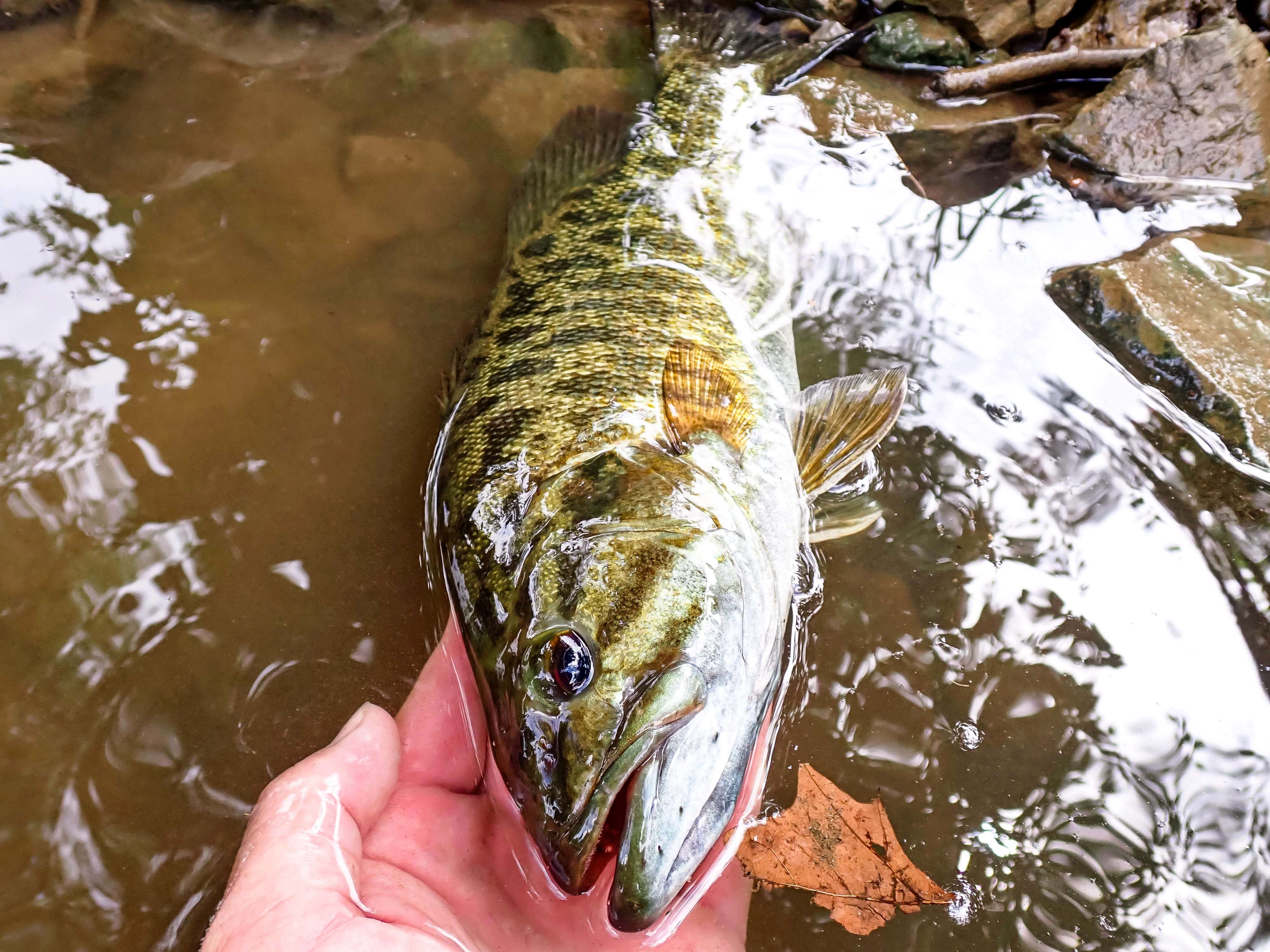
The Hudson River — New York’s most famous river — provides exceptional smallmouth bass fly fishing in its upper tidal and non-tidal sections from the Troy area northward through Albany, the Mid-Hudson Valley, and the Catskill foothills. The non-tidal upper Hudson from Mechanicville north through Hudson Falls and Fort Edward holds productive smallmouth populations in a big-river setting with current structure, rocky banks, and the kind of habitat that produces larger-than-average fish. The tidal lower Hudson from Troy to Manhattan also holds smallmouth, with the best populations in the rocky sections near Hudson, Kingston, and Rhinebeck.
Deceivers and Woolly Buggers are the Hudson’s most effective smallmouth fly patterns. Large Deceivers in natural minnow colors produce well in the deeper current seams and along the rocky bank structure of the upper non-tidal sections. Woolly Buggers strip effectively through the deeper tidal pool sections where bass hold against the current reversal. The Hudson is primarily a boat-access fishery — canoes, kayaks, and small motorboats provide the most effective access to the river’s best smallmouth water. Use 1X tippet for the Hudson’s large fish population.
Pro Tip: The Hudson River’s Stillwater section from Schuylerville to Mechanicville is the most productive non-tidal smallmouth water in New York — an 18-mile stretch with the last significant rapids on the upper river, rocky structure, and fish populations that benefit from cold Adirondack tributary input. Float this section in a canoe or kayak from the Schuylerville boat launch for access to the best habitat, and target the downstream current seams of the Champlain Canal locks and the rocky island channels for the river’s largest bass.