Arkansas is home to some of the finest smallmouth bass rivers in North America — a network of clear, spring-influenced Ozark and Ouachita streams that consistently produce fish that rival anything the Midwest has to offer. The Buffalo National River is Arkansas's crown jewel, the first designated National River in the United States and one of the most spectacular smallmouth fisheries in the country. The Kings River flows through a pristine limestone canyon in the Boston Mountains, offering float fishing that feels remote even though it's within easy reach of northwest Arkansas. The Little Missouri, winding through the Ouachita Mountains, rounds out Arkansas's reputation as one of the South's premier smallmouth destinations.
Arkansas smallmouth fishing peaks from late April through October, with the prime fly fishing window running May through September when water temperatures hold in the 65–78°F range that drives consistent feeding activity. Arkansas's spring-influenced Ozark rivers maintain exceptional water clarity and stable summer temperatures — a crucial advantage over fully rain-fed streams that go warm and sluggish in July and August. A 6-weight fly rod handles virtually all Arkansas smallmouth situations; load up with crayfish patterns and poppers as your foundation and add Clousers for the deeper pool sections. Float fishing by canoe or kayak is the defining Arkansas smallmouth experience — the state's rivers are perfectly suited for day and multi-day floats through wilderness terrain.
The Best Arkansas Rivers for Smallmouth Bass on the Fly
Ranked by fly fishing character, access, and seasonal opportunity.
Buffalo National River
The Buffalo National River is Arkansas's finest smallmouth bass river and one of the premier smallmouth fisheries in the entire United States — the first river designated as a National River by Congress, flowing 135 miles through the Boston Mountains and the Ozark Plateau in crystal-clear, undammed splendor. The Buffalo's water quality is exceptional, with clarity that regularly reaches 10–15 feet in summer low-water conditions. Fish in the 12–18 inch range are common throughout the river's length, with trophy-class bass approaching 20 inches taken regularly from the deep bluff pools of the middle and lower river.
Crayfish patterns are the Buffalo's most reliable producers — the river supports an outstanding crayfish population, and smallmouth feed on them from the first warm days of spring through the last weeks of October. Poppers produce thrilling top-water action during the long summer evenings on the Buffalo's glassy pools, particularly in the middle river from Pruitt downstream to Rush. Float the Buffalo from Ponca through the middle river for the most dramatic scenery and consistently excellent smallmouth fishing — this stretch passes beneath 500-foot limestone bluffs and is widely regarded as one of the finest canoe camping rivers in North America. The National River's campsite system allows multi-day floats that cover 20–40 miles of pristine, productive water.
The Buffalo's wild character is protected by its National River status — no dams, no channelization, and minimal development along its banks. This translates to the kind of wild smallmouth fishing that has largely disappeared from Midwestern rivers. Even during the height of summer, the Buffalo's spring-fed character keeps water temperatures in the productive 65–74°F range.
Kings River
The Kings River is northwest Arkansas's premier smallmouth bass float stream — a clear, limestone-bedded river that winds through the Boston Mountains before joining Beaver Lake near Eureka Springs. The Kings cuts through a spectacular limestone canyon for much of its length, with bluff pools, gravel bars, and long riffles creating the diverse habitat structure that holds large smallmouth throughout the season. Fish in the 11–17 inch range are the standard catch, with good numbers of larger fish in the deeper pools below the most dramatic bluff sections. The Kings River sees substantially less canoe traffic than the Buffalo, rewarding anglers who seek a quieter Ozark float experience.
Clouser Minnows and crawdad patterns cover the full range of Kings River smallmouth situations — the river's clean limestone gravel bottom supports excellent crayfish populations, and bass key on them from spring through fall. Poppers work particularly well in the Kings' long evening pool sections, where bass move into shallow water to feed aggressively as daylight fades. Float the Kings from Arkansas Highway 21 south of Boxley Valley through the canyon section, taking out at Lake Leatherwood near Eureka Springs — this full-river float covers the best smallmouth water and passes through the most spectacular terrain. Day floats are also productive; the river has multiple access points that allow anglers to target specific canyon sections.
Little Missouri River
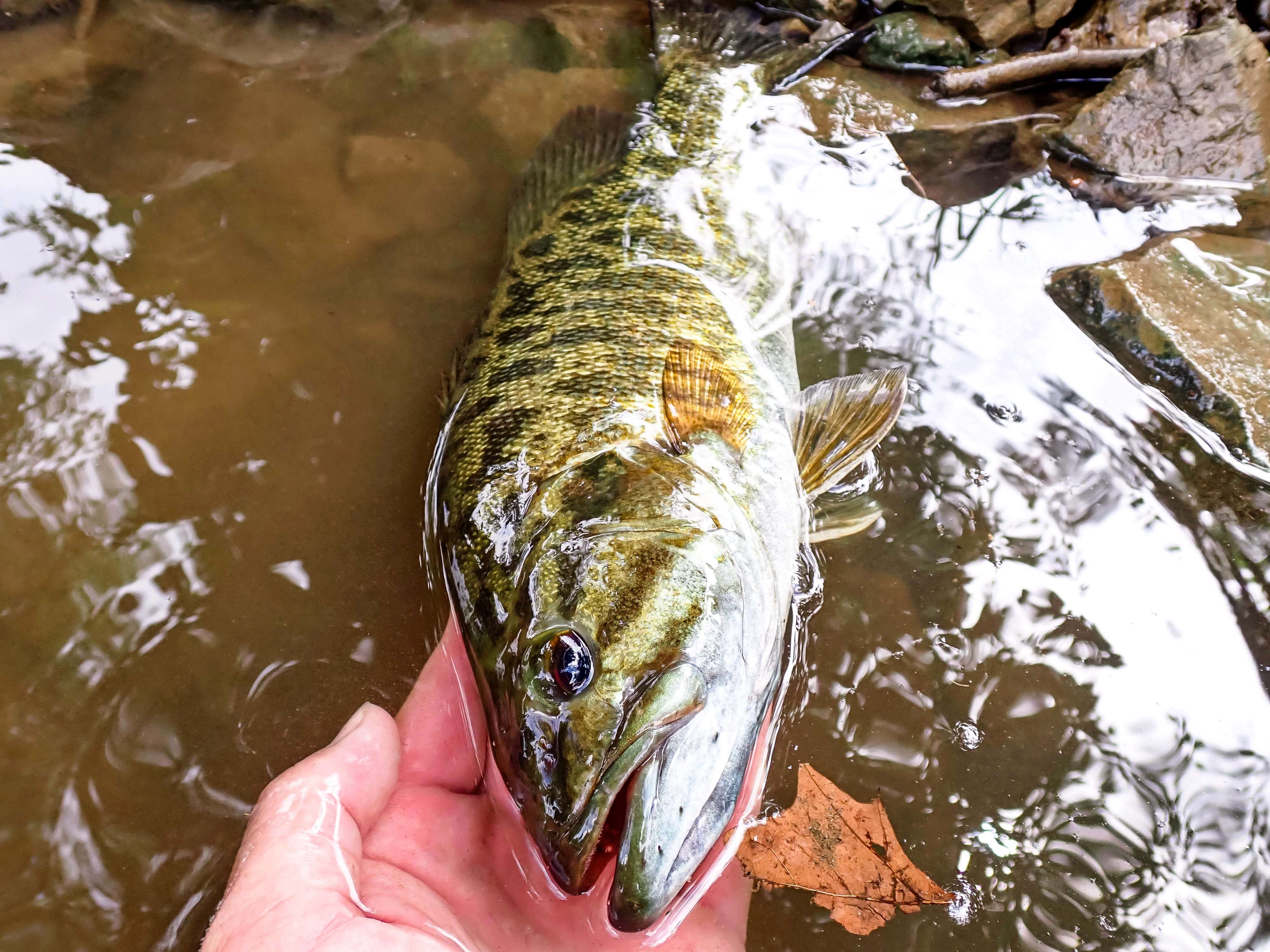
The Little Missouri River offers Arkansas's finest Ouachita Mountains smallmouth fishing — a clear, rock-bedded stream that flows through the Ouachita National Forest in southwestern Arkansas before entering Lake Greeson near Murfreesboro. The upper Little Missouri, above Lake Greeson, provides the best smallmouth habitat: rocky pools, gravel bars, and the kind of structural diversity that concentrates bass throughout the season. Fish in the 10–16 inch range are the standard catch on the upper river, with occasional larger bass in the deepest pool sections. The Little Missouri's Ouachita Mountains setting offers a distinctly different landscape from the Ozark rivers to the north — sandstone outcroppings, dense forest, and a wilder, more remote feel.
Poppers are the Little Missouri's signature summer fly — the river's long, clear evening pools light up with surface-feeding smallmouth from June through August. Woolly Buggers in black or olive are the most reliable subsurface pattern during midday, when fish push into deeper water and cover. The National Forest provides excellent public access along much of the upper river's length, with multiple entry points that allow wading anglers to reach productive water without a float trip. Float fishing by canoe is productive on the middle river during higher spring flows when the river is too deep to wade effectively.
Mulberry River
The Mulberry River flows through the Boston Mountains of the Ozark National Forest before joining the Arkansas River near Ozark — a clear, relatively fast-gradient stream that offers excellent smallmouth bass fishing in a spectacular mountain setting. The Mulberry is best known as a whitewater river during high spring flows, but by late spring and summer it transitions into prime smallmouth water with ideal pool-riffle structure. Fish in the 10–15 inch range are the typical catch, with better concentrations of quality fish in the longer pools of the lower river where the gradient moderates. The Mulberry's National Forest setting ensures largely undeveloped banks and good public access throughout its fishable length.
Crayfish patterns and poppers cover the Mulberry's smallmouth fishing effectively — the river's rocky substrate supports excellent crayfish populations, and surface poppers work well in the evening pool sections. Float the Mulberry from Turner Bend downstream to the lower access points for the best combination of scenery and smallmouth fishing; this stretch passes through the most rugged Boston Mountains terrain and has the river's most productive bass water. Wading is productive in the Mulberry's shallower riffle sections when summer low water concentrates fish in predictable pool locations.
Crooked Creek
Crooked Creek is one of Arkansas's most underrated smallmouth bass streams — a spring-fed, limestone-bedded tributary of the White River in north-central Arkansas that flows through Marion and Boone counties before joining the White River near Yellville. The creek's limestone character gives it the same spring-fed clarity and temperature stability that makes the Ozark rivers so productive, maintaining cool, clear water even through the hottest summer months. Smallmouth in the 10–15 inch range are the standard catch, with the deeper pool sections below limestone bluffs holding the creek's largest fish. Crooked Creek sees very little fly fishing pressure — most local anglers fish it with conventional tackle, leaving it virtually undiscovered for fly anglers willing to seek it out.
Clouser Minnows and crawdad patterns are the most productive Crooked Creek flies — the creek's limestone gravel bottom has a healthy crayfish population, and bass key on them throughout the season. The creek is an excellent wading stream in its middle and upper sections, with enough riffle-pool structure to keep fly anglers engaged for a full day without floating. Public access is available at multiple highway crossings and county road bridges throughout the creek's length. Float fishing by canoe is productive in the lower creek where the gradient flattens and the stream widens through the Marion County bottomlands.
Find Public Access on These Rivers
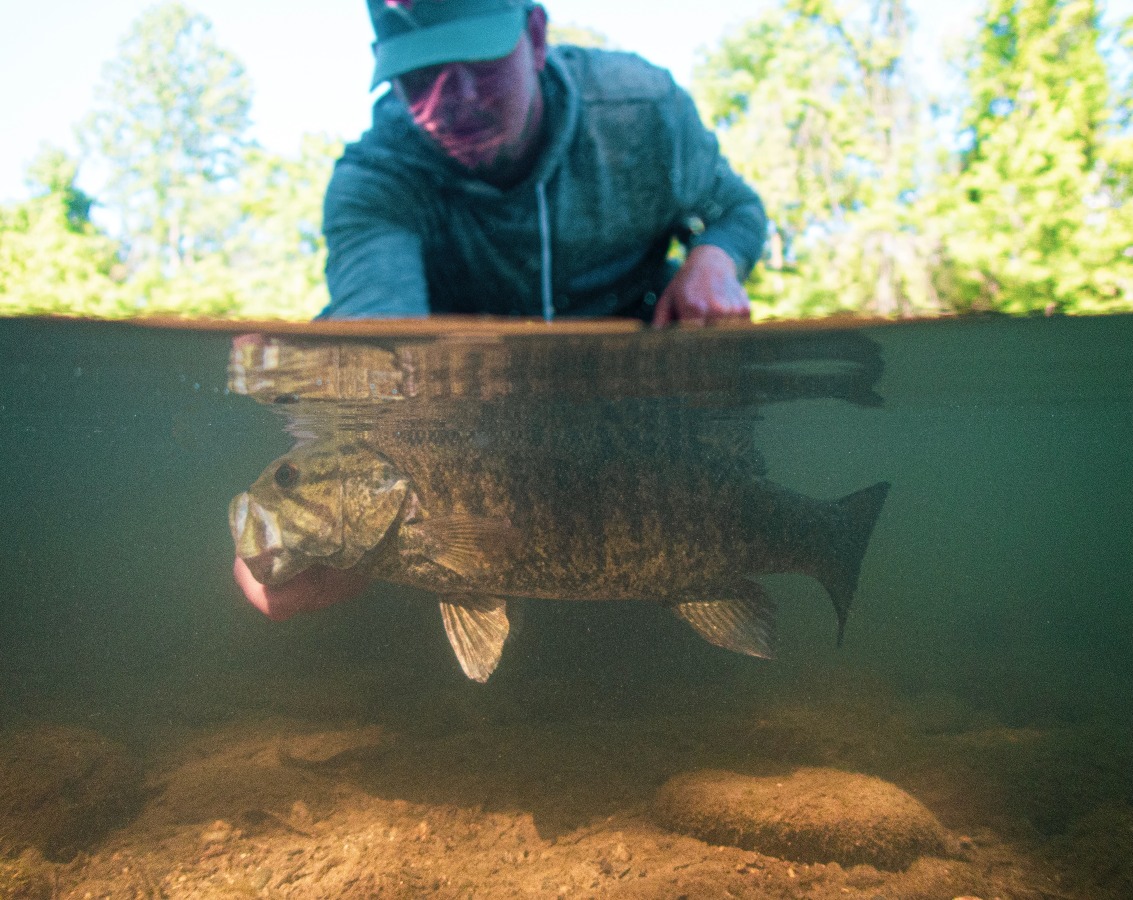
FlyFishFinder maps 37,000+ boat ramps and put-ins with public access boundaries and real-time USGS flows — so you know exactly where to launch and when conditions are right.
Download the AppArkansas Smallmouth Bass Fly Fishing — Frequently Asked Questions
What is the best time of year to fly fish for smallmouth bass in Arkansas?
Arkansas smallmouth fishing runs from late April through October, with peak fly fishing from May through September. The Ozark rivers — Buffalo, Kings River, and Crooked Creek — have spring-fed character that keeps water temperatures in the productive 65–74°F range through summer's hottest months, providing consistent fishing when many other Southern rivers slow down. Late spring (May–June) is exceptional as bass come off their spawn and feed aggressively. Evening popper fishing peaks in July and August on the long, glassy pools of the Buffalo and Kings River. Fall (September–October) brings trophy-sized fish feeding heavily before winter, with dramatically reduced crowd pressure compared to summer.
What flies work best for Arkansas smallmouth bass?
Crayfish and crawdad patterns are Arkansas's most important smallmouth flies — the Ozark rivers' limestone gravel bottoms support exceptional crayfish populations that bass feed on throughout the season. Poppers are the definitive Arkansas evening fly, producing explosive surface strikes on the long, still pools of the Buffalo and Kings River from late May through September. Clouser Minnows in white/chartreuse are the most versatile searching patterns, covering current seams, deeper runs, and bluff pool faces effectively. Woolly Buggers in black or brown work well during midday and in stained water after heavy rainfall on the Ouachita rivers.
Do I need a fishing license to fish for smallmouth bass in Arkansas?
Yes. The Arkansas Game and Fish Commission requires a fishing license for all anglers 16 and older. Non-resident licenses are available in annual and short-term (3-day, 7-day) formats. Smallmouth bass have a daily bag limit in Arkansas — check current AGFC regulations before fishing, as rules can vary by water body. The Buffalo National River is managed by the National Park Service; no additional fishing permit is required beyond a valid Arkansas fishing license, but NPS regulations apply on the river. The Kings River and Mulberry River have sections flowing through private land — use established public access points and launch sites to avoid trespass issues.
What gear do I need for fly fishing Arkansas smallmouth bass rivers?
A 6-weight fly rod is the right tool for Arkansas smallmouth rivers, providing enough backbone for streamers and poppers while remaining fun on average-sized fish. Use 8–10 lb fluorocarbon tippet — Arkansas smallmouth are not particularly leader-shy, and heavier tippet handles the occasional snag on rocky Ozark river bottoms. A weight-forward floating line covers virtually all Arkansas smallmouth situations from surface poppers to shallow Clousers; a sink-tip can help reach fish in the deepest bluff pools of the Buffalo and Kings River during midday. A canoe or kayak is strongly recommended for the best Arkansas smallmouth experience — the rivers are designed for float fishing, and the best water on the Buffalo and Kings River is only efficiently reached by floating.